

No Thursday Night Thunder or Monday Night Smackdown; just a classic school board debate of candidates
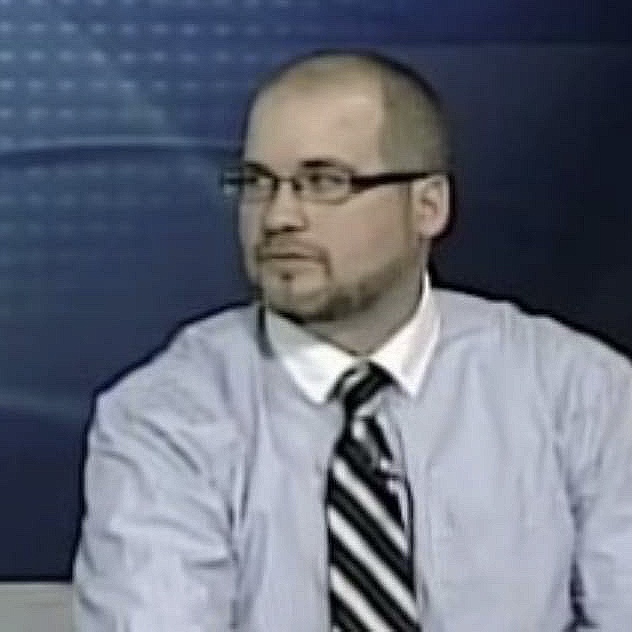
The Board of Education Forum involved eight candidates from the CCGOP
By Chuck Thompson | The Shelby Independent


Thursday night’s Board of Education Candidate Forum involved eight of the nine Republicans running for school board; Jay Carpenter and the two Democrat candidates declined an invitation due to a scheduling conflict.
The “debate” as is commonly more called, involved, (from left to right) Robert Queen (former school board member not currently serving), Brandon Bridges (newbie / never served), Aaron Bridges (incumbent, vice-chair), Shelia Canipe (never served), Rodney Fitch (former school board member not currently serving), Ronnie Grigg (incumbent), Stephen Self, (newbie / never served), and Danny Blanton (incumbent).
The event was hosted by the Cleveland County GOP and Moms for Liberty Cleveland County, with Dot Cherry, a school board member in Gaston County as moderator.
The forum / debate lasted for almost two and a half hours.
There are novels and movies that take place in less time than this event lasted, so, in order to keep your attention, and not write an unintended novel, this report is a summary of the candidate’s responses.
While some candidates at times spoke louder than others, some spoke very fast at times, while others spoke softly, or loud and clear, even with a microphone that was passed down the row, not everyone could be heard clearly at times and there is no known recording of the entire event, so while you may read quotes from some candidates and others will be summarized, each moderator question is listed below with a response from each candidate.
This is not an opinion show; it is not The Shelby Independent’s position to tell you whom performed the best or the worst of the night – this is just a report for you to read and decide for yourself – a mere summary to serve as an unofficial record of the event that night.
You decide.
Each candidate had their strengths and weaknesses. Some answers showed it was apparent the candidate was informed on a certain topic, while others had to rely on their perspective from the outside. Some answers were brief while some answers used what seemed like more than the allowed time frame to answer.
The candidates had 2 minutes to introduce themselves – Dot Cherry moderated the event.
Each question was given between 30 seconds to two minutes to answer a question. The length allowed for each answer was noted by the moderator that it varied depending on the question, but that wasn’t made clear to the candidates with every round.
Some candidates were cut off from completing their answer either to due time constraints of the two minutes, or were interrupted by the moderator, while one candidate continued to speak after the time limit, which the moderator seemed to allow without issue.
“This is not a ‘I got you session,’” Cherry said to the candidates, noting a lot of them were not currently on the board, “You don’t know what you don’t know until you know it” she said. Noting it would be slightly easier than previous debates.
While this may have been stated as such, one question seemed to stump most candidates, when asked about scholarship opportunities which most people know as school vouchers, but the formal term was used in the question, before explaining it as school vouchers.
The candidates sat up on a raised platform, all in a row. Originally, Robert Queen was seated to the right, next to the podium by the moderator, with Danny Blanton on the very far end, having trouble hearing the moderator on that end of the elongated table. Queen and Blanton swapped seats before the debate began, allowing Blanton to be able to hear the moderator.


The questions in this article are marked with “Q:” and in bold lettering; they are not always word for word, as was asked by the moderator because of where The Shelby Independent was seated in the far end opposite of the podium, near the back, it wasn’t always clear what the exact wording was, as the questions were repeated but sometimes in different wording and slightly confusing a couple of times, but overall clear and understandable, the general idea of the question is at least posted below in bold.
Q: It’s the board’s priority is to make policy, but protocol and procedure is handled by administration -- where to you perceive that balance is and why? (is it working) ?
Blanton – “The board is boss of superintendent, and he is boss of employees,” Blanton stated it seems like the board is working for the superintendent. He mentioned that committee meetings need to be in public with all 9 members. “When you’re making decisions for 14,000 kids and 100,000 citizens you can’t be directly transparent as a board member and tell a fib- and I’m not in the fib business and I guess that’s why I get in trouble.”
Self – said you have to follow it to a certain extent mentioning “From what I’m seeing from the outside the past couple of weeks I’m not seeing the protocol and there’s a lot of policy out there,” noting he doesn’t know what is, since he’s a parent but not a board member.
Grigg – on policy committees “What’s the use of having policy if we’re going to make them apply differently to each school or each situation,” arguing that it needs to be fair across the board. He said he could go back over the last three years and each person and circumstance was different, noting he had a conversation with the superintend about this issue. He also mentioned how school pranks had been handled differently, once again mentioning his and Blanton's censure, due to their interaction and information given and specific comments provided to the press, regarding the Burns prank a few years ago. But Grigg noted the Crest prank was handled much harsher. – Cherry interrupted Grigg as he was using his time to answer, stating it is different based on what can hold up in court.
The moderator seemed to inject herself into the debate several times throughout the entirety of the forum, which wasn’t expected.
Fitch – “It’s not up to the board to govern procedures, it is up to the board to makes sure the superintendent is doing that job. He is the one accountable for those procedures being followed.” Adding, if he’s doing a good job then that it was expected and if not then the superintendent should be held accountable.
Canipe – Piggy-backed off Fitch’s and Grigg’s answers but said it is not being followed “If you’re leaving it up to individual administrations to be handled, it’s not the same across the board (every school). “There should not be a gray area, they should get the same punishment.” She said there wouldn’t be loopholes if she was on the board. “Every policy is interpreted in different ways.”
Aaron Bridges – “A lot of the policy comes from the state,” explaining many are already determined beyond what they can do. “One policy we created was the cell phone policy to make students put their phones away during learning time,” he said, noting he was proud of enacting that policy. “There not at school for play time, they are there for learning.”
Brandon Bridges – said, “It’s ambiguous.” – wanting to know if its policy for admins or students. He said censureship was a big deal, also bringing up the two board members being censured in 2023 and then the kerfuffle a couple of weeks ago during and after the school board meeting, “A policy up for interpretation isn’t worth nothing,” he said, stating it should be filed the same way and written clear enough that it should be followed and without any question to what it means.

Queen – Said the superintendent is the CEO and the board of education is like the board of directors, if the audience wasn’t aware, they were by then. Basically, laying out steps of how policy is made. He said different cultures should determine policy “The culture at Kings Mountain is different than Crest or Burns,” he stated. “When you’re on the outside looking in it may look like fairness isn’t being given but it’s determined on a case-by-case basis” almost like a lecture to the candidates and audience of how it should be done.
Q: Should personal beliefs affect your decisions as a school board member?
Self – “Politics should not come into the school board.”
Grigg – “Education is not a party; education is not democrat or republican. We should leave that out completely and make sure kids get the education they need and the help they need. Why are we bringing politics into the school system?”
Fitch – “No,” he said. He doesn’t have any beliefs to prevent him from doing the job, as he agreed with Grigg and Self.
Canipe – Also agreed with what everyone had said before her.
Aaron Bridges – Said he’s proven that his mindset is what’s best for the school system and it’s about common sense, adding, “I’m willing to work with anybody for what’s best for the school system.”
Brandon Bridges – Said as a board member, you represent everyone. He stated he won’t carry personal beliefs yet and said everyone brings some of their beliefs into the mix. Only things impacting the school should be school related issues that are talked about.
Queen – “I think your background and decisions and faith plays into your decision,” he answered. He mentioned the Covid situation, noting it fell upon party lines saying you choose a party based on personal beliefs. “Once you get there that tends to fall away… but your decisions will affect your situation.”
Blanton – Stated he was the first republican to go on the school board, but it was still nonpartisan at that time. He thinks it should still be unaffiliated, adding, “It should be about our children. Period.”
Q: What are your thoughts on Opportunity Scholarships, they are here to stay, and how do you feel that’s changed, if any, in public education:
(Public money can be used for private education; to give parents an opportunity go wherever they want to go to any private school on taxpayer dollars)
The moderator gave her thoughts on many answers which did not have anything to do with the candidates’ perspectives.
Grigg – “Anyone should be able to send their kids anywhere they want to but of the dollars follow then every school should be under the same guidelines,” he said. “I think they all should follow what we have to follow to get our money.”
Fitch – Agreed with Grigg, reiterating his comments that the private schools should be held to the same standards, noting Pinnacle Academy can do certain things public schools cannot. “It’s a little more ‘lax than public schools.”

Canipe – Agreed parents have a right to send kids anywhere, wherever they want. “It has affected CCS because the numbers have dropped,” she said of enrollment.
Aaron B. – Said it does hurt the school system’s budget but agrees students should go where parents want them to go. Cherry cut in to correct him or add to his comments which are irrelevant to what he said as they were not from him and will not be mentioned.
Brandon B. – Said it seems like “favoritism the way things are played out,” but supports parents’ right to choose where to send their kids where they’ll get the best education. Mentioning CTE has come a long way, noting he was happy with his own public education
Queen – “School vouchers,” he said – it’s a fancy way to say it Queen noted. “The checks we send to charters each month are a portion of taxes – the vouchers are going to private schools.” He said that he supports choice, “But I don’t like it in the form it is because anybody can apply and get the scholarships.” Mentioning it should be only for kids in low-performing schools and was adamant about that opinion.
Blanton – Doesn’t have a problem with it either. “Apples are not the same at the same places are not apples and pears. I have to say it the redneck way,” noted Blanton. “But when they get to that charter school they can’t handle how they teach and then they come back to us and guess what – that money don’t come back and we got that kid for no dollars and we can’t turn no child down, we have to take them all” he said. Also mentioning they have to furnish lunches for every kid and other schools do not.
Self – He supports parents’ choice. “I think they should move from school to school without the hassle it is if they’re having trouble is one district they should move to another,” Self said. He also noted there’s a large home-schooling community “Why wouldn’t a kid want to be in a socializing aspect, but I’m in support of parent’s choice and the voucher.”

Q: What are your top 3 priorities for Cleveland County Schools?
Fitch – Underperforming schools, noting the system is hurting for money and needing more funding. “Nothing comes to mind right now,” he replied when trying to think of a third priority.
Canipe – Education for children, noting curriculum changing that isn’t “appropriate for that age” she explained that some kids don’t start in preschool and some kids don’t get to play anymore. “We have to let our teachers get back to teaching.” Then, accountability – “I’m seeing raises being given not needed. WE have got to be more accountable how that money is spent” – The timer cut her off before she had a chance to state a third priority.
Aaron B. – Performing schools, teamwork, and capital improvement list to work on.
Brandon – Financial literacy classes, mentioning that Lincoln County Schools have a financial literacy class for students. Nutrition was his second priority, noting it needs more attention “If I’m hungry, I can't think.” His third priority was the facilities / building care / construction
Queen – Succession planning for the superintendent and other administrators, “I expect a lot of changeovers over the next four to five years. His second priority was teacher recruitment and retention and his third: Capital improvement plan – “The jail is going to be done this summer so were going to be talking (with the commissioners) about schools this summer,” he said, answering the question as if he were currently on the board.
Blanton – Teaching basics. “It takes two days to tell what 2+2 is,” he replied. His second priority was helping children to get on grade-level. “Maybe a kid needs to be left behind. I needed to be left behind when I was in school,” he added. His third was accountability. “Hold us accountable, anyone accountable for any actions they do with the money and if we know that we might not need as much money for our projects; and saving money.”
Self – Agreed with Danny Blanton about getting back to the basics. “Kids are getting left behind.” Self said the the kids in the middle are getting left behind at no fault of the teachers. “They are working hard trying to make Dr. Fisher look good.” His second priority was positivity / teacher morale. What can parents do to help teachers and hope to get more positivity out of teachers. Hi third priority: Upgrades. He wants to see schools modernized / upgraded, similar to what Queen had mentioned. “If we’re spending millions of dollars to build a jail and if we don’t teach them, they’re going to end up there!”

Grigg – Teacher pay and compensation. “Teachers shouldn’t use their own money to buy supplies. How come you can go to South Carolina and get a job for $10,000 more doing the same thing? That’s unacceptable.” Special needs children were his second thought, “We need to work harder to more money into our system for kids who need more attention” he said, mentioning North Shelby. “Those teachers have their hands full no doubt about it, but we need more funds into our special needs.” His third was finances. “If we’re borrowing money, why are we putting more into our administrative offices? It doesn’t make any sense. It’s accountability.”
The moderator didn’t seem to like that answer based on her reaction.

Q: What needs to be done to foster a better working relationship that everyone needs to – what is the relationship with County Commissioners?
Canipe – Feels the county commissioners and CCS need to have a good relationship so they all understand what is needed.
Aaron B. – Bridges said they have a good relationship with the county commissioners noting bus drivers, cafeteria workers pay. “We’re have a positive working relationship” he said noting they gave CCS money when they needed it.
Brandon B.– Bridges mention when CCS didn’t have money for toilet paper and thought the check should have gone directly to the toilet paper (per se) instead of giving it to CCS, who used a portion of it for pay raises. “It doesn’t make any sense to pay admins as if they live in Charlotte and teachers as if they live in Shelby.” Bridges criticized how CCS admin handled the loan given a few years ago which resulted in pay raises for CCS administration.
Queen – Said they had a mostly positive relationship and said mostly because they were two different boards and were limited to what the county would give the school system. Queen light-heartedly warned the commissioners, “I will be back and we will meet when the jail is finished.” (Queen is not currently on the board of education).
Blanton – He suggested the school board and the county commissioners should have workshop together once a year. “They say what we know and we say— what we know and say what we know….” mentioning communication may be good now but could be much better. “Far as I’m concerned, open it up to the public, be transparent; bring our schools up to par. If we told them what we need I’m sure they will work with us, but telling them one thing and another, and tell them another thing…” he shrugged – Then the moderator asked Blanton, ‘why not’ and Blanton said he has tried.
“Maybe you’re not the one who should ask (the commissioners).” The moderator said, stating her intent was to only add a bit of humor into the situation.
Self – “You should have a positive interaction with any board. All elected officials should have a positive interaction because we’re all in it for one thing – the education of the kids.”
Grigg- Said the commissioners are easy to work with but noted his concern that the school system hasn’t brought them a plan, but yet claimed the chairman of the school board and the superintendent are having meetings with the commissioners asking for money but never present a plan. “We all need to sit down and work together for the same goals,” he concluded.
Fitch – Agreed there has been a good relationship and the school board needs to present plan before asking for any funds. “The end of the day, it’s the children we have to take care of.”

Q: How would you encourage a higher level of parent involvement with parents in schools?
Aaron B. – Said being a parent and board member he sees both side of the coin, stating he thinks they do a good job communicating with parents but noted you can do so much, but it’s up to the parents to meet them halfway to communicate and participate in the schools.
Brandon B. – It’s the teacher who has to get the parents involved and doesn’t think its fair to give the teachers more responsibilities to do to try to force parents to get involved.
Queen – “Parent involvement is the holy grail of education,” but noted it’s the same parents that come out every time. Some will always be involved, and some won’t.
Blanton – “We need to make sure that our leaders return calls to the parents. You might not like what they say to you but… I receive every call. I get chewed out, but I’m a big boy I can take it” noting they have to accept parents the way they are.
Self – Said parents don’t know about a lot of things, speaking as a parent himself – “You don’t get a phone call,” he said. “We don’t get that. You go into ‘Dojo’ or whatever and have to look in there to see if your kid did good…”
Grigg – He mentioned how it’s very limited. He said they have awards and things at various board meetings and it looks like a lot of people there but soon as awards or speaking is over the auditorium clears out, “Then we just have the same seven people there (at the meetings).” He also noted it’s always the same parents at other functions, as what Queen answered. Grigg said, “You’re always going to have that certain group that puts time and involvement into their kid’s education and then others that think it’s up to the teachers, and I don’t know how to change it."
Fitch – Agreed with what had already been said by the other candidates, stating parents are either involved or not.
Canipe – As a retired teacher, she said she knows what it was like trying to get parents involved, “You just do what you gotta do to get them involved, but I think, overall, if they want to be there they will be, - if not—” she shrugged. Noting there is a higher participation rate of parents in elementary schools than middle and high schools.

Q: Where do school board members draw the line on answering questions or making decisions on certain calls?
The moderator had Blanton go next, out of order to answer the question.
Blanton – “When they call me, I give them the protocol to follow the steps” said Blanton, noting they should talk to Mr. Borders and go from there “He is our go-to person.” But also noted you talk to the teacher first, the principal and then Mr. Borders. “I do answer my phone calls” he added that the last call is Dr. Fisher. “I get maybe one out of 100 call me back and say they’re not satisfied with their answer” – cut off by the bell time limit.

Brandon B.– Said correspondence with the school board only needs to be via email, so it’s saved and recorded. This way there’s proof of everything that was said. “That needs to be held in email only” noting it could be legal or run by a lawyer but there’s a paper trail.
The moderator shifted gears, moving on to another question.
Q: What sets you apart from everyone else on this stage, tonight?
Brandon – Said he is not a teacher, not a parent nor an administrator. “I’m a concerned citizen” he said, noting there’s people on the board that aren’t parents or teachers and that sometimes can help when you’re not influenced by that, and also being an I.T. professional, he said that expertise could help the school system.
Queen – Said he doesn’t like these types of questions because, "When you talk about yourself it sounds like you’re bragging." He noted his previous time on the school board was an experience where he learned a lot via his professional work and being on the board at Cleveland Community College gives him the qualifications and experience needed for the board of education.
Blanton – “I work for y’all,” said Blanton. “Your kids, your grandkids, no matter, I work of the taxpayers of Cleveland County, simple as that,” he said. He also mentioned his construction experience and knowing when CCS receives bids it’s obvious they are getting gouged. “I was there. I work for you. That part sets me separate – and I’ll answer your phone call.”

Self – Said he’s unique because he’s not into the diaper talk. He said he’s into being ethical and getting the job done. “I’ve seen so much different stuff happen; all I can promise is I’ll do the right thing for the kids, parents and teachers”
Grigg – Said he was a single dad and had to be responsible for getting his daughters back and forth to school and was a lot more involved than most dads in schools. He said the last eight years he worked for Clearwater and worked with people from all works of life. Said he is a regular person; down to earth board member.
Fitch – Had a different view when he was on the board last time than he does now. “I have learned a lot from that experience and have a background in law enforcement.” Fitch noted that with his law enforcement background he can help with creating a safe environment to help create a better learning environment.
Canipe – She said what sets her apart, she said, is having spent 30 years as a teacher. Being a mentor, an advocate and working with teachers know what it is like being in the classroom day after day. And building relationships with parents and students.
Aaron B. – Noted he has several children in the school system; been on the board since 2022, and worked in finance. “It’s not about politics for me; whether I win or lose, I’ll be involved with the school because of my children.” Bridges added that it’s about caring and being involved.
The moderator noted that being board member is to be “the ultimate cheerleader for the school system”

Q: Are you willing to support the primary candidates in the election?
Blanton – Wished people would fill up seats in the board meeting and then was veered back to the question, “Absolutely not if it’s not for the taxpayer and the children.”
Self – Yes
Grigg – “That’s a hard one to answer,” Grigg said. He mentioned there were a lot of things that went on behind the scenes and it depended who the candidates were and if they were on the board for the right reasons.
Fitch – Yes
Canipe – Yes, will support the outcome but she encouraged people to vote for a candidate based on what they stand for and not just because of friends or popularity
Aaron Bridges – Yes.
Brandon Bridges – “There’s nine people on the school board is because if we always voted as a community (for CCS decisions) we would never get anything done.” Yes, he will support the four winners.
Queen – Yes.
Early voting begins Feb. 12, and the actual primary voting day is March 3, 2026.


Follow The Shelby Independent on Facebook, Instagram and TikTok. To contact Chuck about a story idea, send an email or visit the contact page.
Chuck Thompson is a reporter and columnist for The Shelby Independent.


Copyright 2026 The Shelby Independent


Comments