

Exclusive: Commissioner Chairman Kevin Gordon talks taxes, debt, economic growth and youth
Updated: Aug 29, 2025
By Chuck Thompson | The Shelby Independent

Kevin Gordon is no stranger to public service. His professional career before becoming Chairman of the Cleveland County Board of Commissioners is filled with a plethora of understanding governmental budgets, understanding public perception and dealing with the red tape that comes with public office bureaucracy.
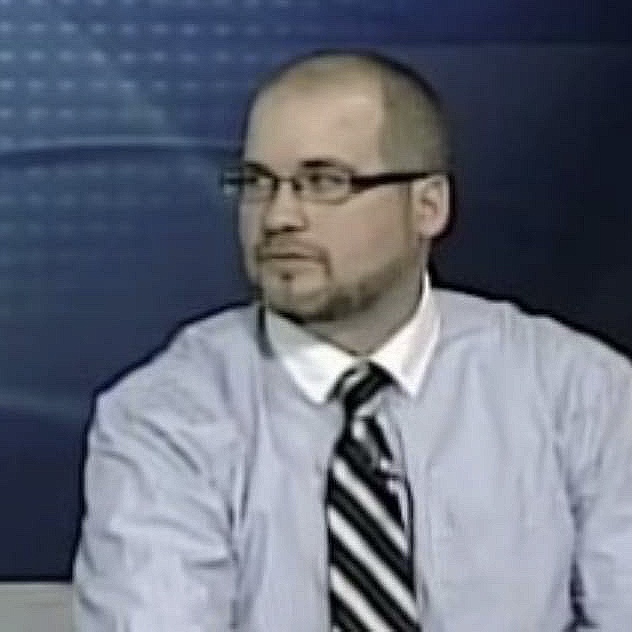
The Shelby Independent recently sat down with Commissioner Chairman Gordon for a one – on – one, in-depth interview, covering his professional career, and talked property taxes, the county budget, the new Justice Center complex, the local economy and how to keep the future workforce from moving away after college graduation.
At 57 years old, Gordon’s credentials would impress even the harshest cynic. He has served in various positions, boards and as a trustee for the Charlotte Firefighters’ Retirement System and local governmental retirement system, to serving as a past president of the North Carolina Association of Fire Chiefs and the N.C. Firefighters’ Association, to Cleveland Community College, and (Retired) Deputy Fire Chief of the Charlotte Fire Department, and still a volunteer member with the Waco Fire Department. He has worked in fire operations, emergency management, budgets and human resources. Gordon has basically been in public service most of his life, starting at 16 when he became a volunteer firefighter.
And that isn’t even everything. But how does this summary of his experience make him the right person for the position of Chairman of The Cleveland County Board of Commissioners?
With a master’s degree in Fire Administration, it parallels public administration in his current role as chairman.

Gordon, who was just reelected in 2024, was asked why he felt being a county commissioner was a good fit for him and the citizens of Cleveland County.
Having served in an executive position in Charlotte, he said the decisions made did not have a long-term impact on himself, nor his family, but as he explained, everything at home does effect him, his family, friends and neighbors.
“We all have to live here,” he said, bluntly, without hesitation. “Being a public servant, it made perfect sense to serve in a capacity to invest in my community and help my community grow by keeping their exposes as low as possible. It's a calling – plain and simple, it’s a calling to do this.”
“The decisions made in Raleigh doesn’t effect them – it affects us here,” Gordon, who is a life-long resident of Cleveland County, continued. “But here, the decisions we make are real-time. It’s about doing what is best, with what you have to work with for your friends and neighbors. We all have to live here; I have to answer to people, face-to-face.”
He added, “Faces I know and those I haven’t yet met are here in the commissioner chambers, they call us, I run into them at a ball game, a gas station or grocery store. You must be willing to face that, knowing you are making the best choices for everyone; knowing you’re going to have to see members of the community and hope they realize what we are doing here is what is best for everyone in Cleveland County.”
Gordon said the accountability is the reaction to decisions, and if you feel that you’re doing what is best for the community it is easy to face that accountability.
“I am ultimately a servant of the people,” he noted. “As an elected official, I am here to serve them.”
A fiscal conservative, Gordon believes in stretching the budget to the max, without bloated excess, expecting the various county departments to operate efficiently with what is available to them.
Recently, the county property tax rate was set, which the state requires by law to keep the values of property within an 85% - 115% range of assessment to property values. When the tax value falls below 85% every municipal and county government must reappraise property to meet this state criteria.
“The county doesn’t get to choose the 85 to 115% rule – and by law, the property values have to be within this range,” Gordon noted.
While clearly many homeowners weren’t happy with the end results, the tax per $100 was lowered, even though the value more than doubled for many property owners.
Gordon said that was unavoidable and would have happened regardless of anyone that sat in any of those five seats in the commissioner chamber, but he is aware of the burden inflation and the recent real estate boom and thus the increase in market values have caused a strain for many homeowners.

“I think the process was fair, but I do have empathy for what they’re dealing with and going through,” he expressed. “What some citizens don’t know is the four-year cycle and the mandate by the state just happened to line up this year – the county didn’t intend this to happen; that’s just how it all came together – whether it came together as residents wanted to, or not.”
He also stressed the importance to know the county only sets the county rates and has nothing to do with the municipality rates a resident might reside in.
Not all municipalities cut their rates, sending some bills higher in certain towns than in others.
Just Shelby and Boiling Springs lowered their municipality property tax rates this year.
Gordon does care about what Cleveland County residents think, and if there is a concern to express it, if need be, such as frustration with the property tax reevaluations, he wants to know about it.
“One thing I think is very important,” Gordon added. “If someone has a concern or feels like they’re not being fairly represented, I can pick up the phone, return an email, and give them either a resolution or an option to solve the issue. It may not always be what they want to hear, but we (Cleveland County Board of Commissioners) will have an answer.”
So, how does the board of commissioners work together? Do they always agree with one another? Does one member hold more authority than the others?
“I see us all as colleagues,” explained Gordon. “I don’t see that chair (chairman’s seat) as any distinct role any more than the others. I always say, ‘No one commissioner can pass anything by themselves and no one commissioner can stop anything,’ – it’s about working together effectively for the community. No board is always going to get along, but we work to do what is best for Cleveland County.”
“It takes work,” he added. “They all have opportunity for input and that is important for the process to end up with a better product – a better decision for the citizens of Clevland County.”
Which all ties back to the people of Cleveland County, noting that community input is needed for the commissioners to adopt better governance.
“If we don’t hear from the citizens, we are making decisions in a vacuum and that’s why it’s important to hear from the people that we represent.”
Recently, floating on social media, there have been unsubstantiated claims (that this publication could not reach) by those who have said their mobile homes have tripled in value. Several people have stated their bewilderment that something classified with wheels would go up in value.
While this has yet to be verified, Gordon said it is being investigated; possibly the increase came from permanent improvements to the land or just the increase in the value of itself.
“If we make a mistake, we're going to make it right” Gordon said County Manager David Cotton’s motto is, “We have to take our medicine and move on.”

The popular gun range in Cleveland County, Foothills Public Gun Range, was another topic of discussion. In partnership with the N.C. Wildlife Commission and Cleveland County government, it is enjoyed by many – and something most residents would not want to lose – but there are still some questions as to why the county maintains the range with taxpayer dollars when the budget is tight and property values having to be readjusted according to state requirements sent tax bills much higher to the shock of the owners. Is this something worth paying for with county funds? Paid by the taxpayers’ dollars, of course.
Some of the most avid shooters are against it, but many others are for it. A gun range is a good idea for both recreation and firearm safety education, but is a public range paid for by taxpayer money, a responsible cost for the county budget each year?
“It has a cultural benefit for Cleveland County. The Foothills Range is the closest thing the county has to something like this,” Gordon replied. “A large part of Cleveland County’s population is into shooting, it’s part of our way of life, and archery, too; the range serves as a recreation area to hone their skills in a safe manner and have fun.”
And self-sufficiency is apparently the goal, freeing up tax dollars for other services in the future.
“The end goal is to get the range self-sufficient as much as possible,” Gordon said the cost is more along the line of half a million dollars for the county taxpayers; the difference between what the range brings in and the overall costs to maintain the range park.
Gordon also noted that raising fees is something that is being studied as a possible way to offset the deficit of the range, also mentioning as more people use the range, the more it helps with the cost.
But for more people to spend money on fees for the range, not to mention paying their property taxes without feeling the financial crunch, requires a strong local economy.
Pro-economic growth for Cleveland County goes together with retention of a young work force. Bringing in new industries, having skilled workers and qualified professionals, along with retaining Cleveland County’s youth after college graduation is extremely important to Gordon.
When a new industry is considering moving to Cleveland County, a company doesn't just look at the area they’ll be in, specifically, but the county as a whole – and even outlying areas. Everything from Casar to Kings Mountain are studied and investigated for accessibility, affordability / cost of living, access, distance to different places and overall quality of life (just to name a few).
When a specific area has a major problem, it may not affect the entire county but can reflect on the county as a whole.

The recent issue Kings Mountain has faced with their water complaints by residents, and business owners, is an example of how something that is confined to a certain part of the county can reflect on the entire community.
“It has been a problematic issue,” noted Gordon, “When the citizens have a complaint it resonates out across social media, and other places. This is something industry might take into consideration and hesitate.”
Gordon noted the issue has not made any impact as of yet, but it’s an example of what could potentially cause a problem for any county, municipality or community. He also stated that the City of Kings Mountain has not made a request for the county to assist in anyway with its ongoing water problem.
“We have to be looked at as a viable option when bringing in new industry to the region for new jobs,” he added. “The economic viability of the whole county is looked at on paper, even though Kings Mountain’s problem is Kings Mountain’s problem.
And every area has their own problems. As Cleveland County’s population steadily grows, so do the problems that face any county as a whole.
“When growth gets into the double digits it gets harder to manage – from traffic to all other aspects downstream from that,” he said, noting that more housing brings in more tax revenue but also requires more services for water, electricity, roads, stoplights, police, EMS and other services. “Growth, which can be economically positive for working residents, only increases the county budget for government.”
But, luckily for Cleveland County, growth has been under two percent over the past decade.
“We should be able to manage growth through infrastructure, new schools, more EMS, law enforcement services, etc., since we are a rural agriculture county,” he added.
But growth in population means growth in government and crime — and debt.
The county is about to take on extra debt for the judicial complex, but Gordon reassured the debt is low for county’s new Justice Center. The debt expectation for the county was 75 million; he said that could go up or down by a few million either way depending on future costs due to logistics and inflation. Some of the construction is being paid for by state grant money.
The concept for the new Justice Center complex was made before Gordon came on board as a county commissioner, and the design was approved in 2021.
Demolition started in late 2022, with the removal of the old Shelby Star building, and the foundation construction began in 2023. Gordon stated the completion date is expected to be October 2026 for ‘Phase One’ and early 2027 for ‘Phase Two.’
Phase One is the completion of the building itself, and the occupation of the new Justice Center.
Phase Two will consist of the demolition of the current courthouse, which the grounds will be used as parking for the new complex.

Gordon said he has a positive outlook on both industry and tourism growth for Cleveland County, but warns residents should be guarded on tourism, noting it is a positive thing for the county, but it is not going to replace agriculture or manufacturing.
He also hopes that the youth will be inclined to stay, or return home after college, boosting the economic viability and moral of the county, too.
“Whether they’re from families that have been here for generations, or new residents to our county, Cleveland County has been a place where kids grow up and move away,” Gordon said. “Hopefully, we can recruit our best talent and bring them back home to start their own business, or work for those that are already here.”
Gordon’s family went through the local school system and came back to Cleveland County. His wife Sherry attended college at Belmont Abbey and then came home after graduation. “We’re all products of the public school system, form Crest to Burns,” he smiled.
He continued his thought in a visible tone of concerned expression, stating, “I hope our Cleveland County youth don’t grow up to believe that in order to have a viable, profitable, life they have to go somewhere else – it can be here, it should be here, and I hope they will return and come home.”
Follow The Shelby Independent on Facebook, Instagram and TikTok. To contact Chuck about a story idea, send an email or visit the contact page.
Chuck Thompson is a reporter for The Shelby Independent.


Comments