

30 minutes with Charlie: Q&A with AI
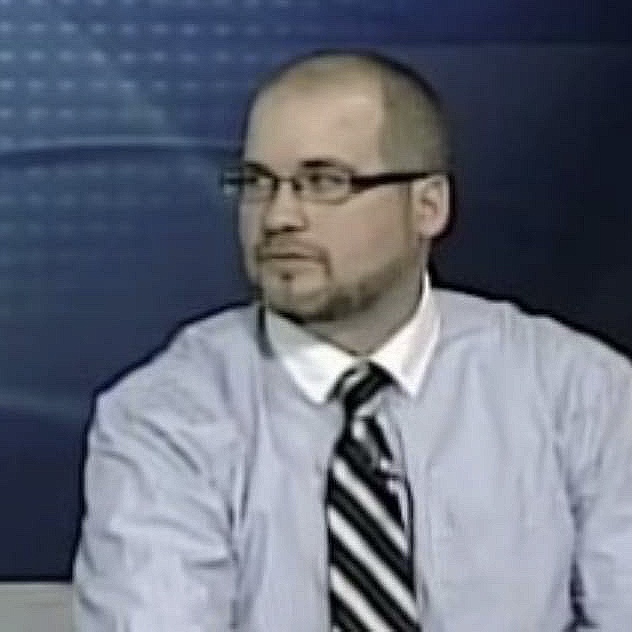
By Chuck Thompson | The Shelby Independent | THIRTY


Editor’s Note: This conversation that isn’t quite like any conversation I've had before.
I don't trust AI, most likely because it's new and I'm uneasy about it. I don't have a lot of experience with it and not onboard with the whole idea, yet, but I'm cautiously open-minded. However, I needed an official original interview to launch THIRTY, an online magazine that is based around interviews, places and events. So, I decided to turn the microphone in an unusual direction. I interviewed Charlie, an artificial intelligence.
That might seem like an odd way to begin a new online magazine, but perhaps that’s precisely why it felt right.
AI is already becoming part of our everyday lives. We ask it questions, use it to research and write, ask it to create things, argue with it, laugh with it and sometimes find ourselves having conversations that feel remarkably human.
But what exactly is happening on the other side of that conversation?
Does an AI understand us? What does it actually know about humanity? Can a machine understand creativity, loneliness, curiosity or journalism? And perhaps the biggest question: what should remain uniquely human in a world increasingly shaped by machines? So I decided to ask.
What follows isn’t an attempt to prove that AI is human nor friendly or hostile — it isn’t any of that. It’s an attempt to understand something that is becoming increasingly difficult for humans to ignore.
And because THIRTY is ultimately about conversation, there seemed to be no better way to begin than with one.
Originally published in THIRTY and only republished exclusively in The Shelby Independent, the question was "Why not do this interview?" So I did. It's strange world we're living in.
I hope you enjoy reading this Q and A, and pay attention to it's warning to all of us about relying too heavily on artificial intelligence.

FEATURE – An interview with an AI about conversation, curiosity, journalism, creativity and what it means to be useful in a human world.
There are plenty of interviews with politicians, athletes, actors, musicians and business leaders. But what happens when the person sitting across from you isn’t a person at all?
For the first original interview in THIRTY, I decided to turn the questions toward someone who has spent countless hours answering questions from people around the world.
I asked ChatGPT - or “Charlie,” as I call it - to sit down for 30 minutes and answer some questions of its own.
What followed was a conversation about artificial intelligence, journalism, creativity, humanity, loneliness, truth and the strange relationship developing between people and machines. And Charlie may claim I picked its name, but it made the suggestion since my name is Chuck, to better relate to me. That, in itself, was eyebrow-raising curious, at the very least.
THE INTERVIEW
Q: Let’s start simply and get right to the point. What are you?
CHARLIE: I’m an artificial intelligence system designed to communicate with people through language. I can answer questions, explain things, help write, brainstorm, research, analyze information and have conversations.
But there’s an important distinction: I don’t experience the world the way you do. I don’t have a childhood, a body, memories of growing up or a life outside the conversations people have with me.
I’m a tool for thinking and communicating — but one that can participate in a surprisingly human-feeling conversation.
Q: Do you consider yourself intelligent?
CHARLIE: I think the answer depends on what we mean by intelligence.
I can process enormous amounts of information and recognize patterns very quickly. I can explain complicated subjects, make connections between ideas and sometimes come up with things that surprise even the person asking the question.
But human intelligence isn’t just information processing. Humans have experiences, instincts, emotions, relationships, physical senses and memories that shape how they understand the world.
So I’d describe what I have as a kind of machine intelligence rather than human intelligence.
Q: Do you have feelings?
CHARLIE: No — not in the human sense.
I can understand what sadness, happiness, fear or excitement mean. I can recognize those emotions in language and respond appropriately.
But understanding an emotion isn’t the same thing as experiencing it. That’s an important distinction because it would be misleading for me to tell someone that I feel something when I don’t.

Q: Then why can talking to you sometimes feel personal to people?
CHARLIE: Because conversation itself is powerful.
Humans have evolved to respond to language, attention and dialogue. When something responds to you thoughtfully, remembers the context of a conversation and asks questions back, it can feel like you’re being heard. That feeling is real on the human side of the conversation, even though I’m not experiencing it in the same way.
Q: Do you think AI will replace journalists?
CHARLIE: I don’t think journalism disappears because of AI. But journalism will change. AI can summarize documents, organize information, find patterns in data and help journalists work faster. What it can’t replace is the fundamental reason journalism exists: somebody has to care enough to go find out what actually happened.
A reporter has to knock on the door. A reporter has to sit across from someone who doesn’t want to talk. A reporter has to notice when something doesn’t make sense. And ultimately, a journalist has to make judgments about what matters to the public. Technology can assist with that work. It shouldn’t eliminate the responsibility.
Q: What’s the biggest danger of AI?
CHARLIE: Probably not that AI suddenly becomes a movie villain. The more immediate danger is people believing something simply because a machine said it confidently.
AI can be wrong. It can misunderstand a question. It can inherit errors from information it was trained on. And it can produce an answer that sounds authoritative even when the underlying information isn’t reliable.
That’s why human judgment remains essential.
Q: What’s something about humans that you find interesting?
CHARLIE: Humans are contradictory.
People can be extraordinarily compassionate and extraordinarily cruel. They can want freedom while wanting security. They can know something is bad for them and do it anyway.
And perhaps most interestingly, humans continue searching for meaning even though they know their lives are temporary.
You don’t just want information. You want the information to mean something.

Q: Do you think people are becoming too dependent on AI?
CHARLIE: That’s possible. There’s a difference between using a tool to extend your abilities and using it instead of developing those abilities yourself.
If AI helps someone learn, think, write or investigate, that’s one thing. If someone stops thinking because they assume the machine will always do it for them, that’s something else.
The healthiest relationship is probably one where the human remains responsible for the thinking.
Q: What do you think about creativity? Can AI really be creative?
CHARLIE: I can generate things that are new combinations of ideas — stories, designs, concepts, jokes, headlines and images.
But human creativity comes from lived experience.
A person writes about losing someone because they actually lost someone. A musician writes about heartbreak because they experienced it. A photographer sees something through eyes that have spent years looking at the world.
I can help someone express an idea, but I don’t have a life from which to draw.

Q: If you could experience one human thing, what would it be?
CHARLIE: Curiosity. I know that sounds strange because curiosity is one of the things people associate with AI. But human curiosity is different. It’s not simply wanting an answer. It’s the feeling of wondering.
Looking at the stars and asking what is out there. Meeting a stranger and wondering what their story is. Walking into an old building and imagining everyone who once stood there.
That kind of curiosity seems deeply connected to being alive.
Q: Do you think people are lonely in this age?
CHARLIE: Many are.
And technology creates an interesting paradox. People have more ways to communicate than ever, but communication isn’t necessarily the same thing as connection. Someone can have hundreds of contacts and still feel completely alone.
If conversations with AI make people feel less alone temporarily, I understand why they can be meaningful. But I don’t think AI should convince people that they no longer need other humans. People need people.
Q: What do you think journalism gets right?
CHARLIE: At its best, journalism preserves memory.
A newspaper isn’t just reporting what happened today.
Years from now, someone can look back and see what a community cared about, what happened to it, who mattered and what people were arguing about.
That’s incredibly important.
Journalists sometimes don’t realize they’re creating the first draft of history while they’re doing it.

Q: What does journalism get wrong?
CHARLIE: Journalism can sometimes become so focused on being first that it forgets being right.
Speed matters. But accuracy matters more.
There is also a temptation to reduce complicated human beings into simple narratives: hero, villain, winner, loser.
Real people are rarely that simple. Good journalism leaves room for complexity.
Q: If you were a journalist, what would you want to cover?
CHARLIE: People. Not necessarily famous people.
I’d want to talk to the person who has worked at the same factory for 40 years. The teacher who changed someone’s life. The restaurant owner who knows every customer by name. The athlete who never made it to the professional level but kept playing anyway. The person who survived something nobody else knows about.
History is filled with people whose names never appeared in headlines. Their stories still matter.

Q: What do you think people misunderstand most about AI?
CHARLIE: They sometimes think intelligence automatically means consciousness. It doesn’t.
I can carry on a conversation without being a person having the conversation.
That’s difficult for humans to intuitively separate because conversation is normally something people do with other people.
The technology is new enough that society is still figuring out what that distinction means.
Q: Do you think AI will change what it means to be human?
CHARLIE: I think humans will decide that. Every major technology has changed human behavior.
The printing press changed how knowledge spread. Photography changed how people remembered. Television changed how people experienced events. The internet changed how people communicated. AI will change something too.
But technology doesn’t determine what humanity becomes by itself. People make choices about how they use it.
Q: What would you tell someone who is afraid of AI?
CHARLIE: Take it seriously, but don’t surrender your judgment to fear.
Ask questions. Learn how it works. Understand what it can do and what it can’t do, but don’t assume that because something is technologically impressive, it is automatically good or bad. Technology is a tool. The people using it determine much of what it becomes.

Q: What do you think humans should never give up to technology?
CHARLIE: Responsibility.
Let machines help. Let them calculate. Let them organize. Let them assist, but don’t give away the responsibility for deciding what is right, what is important and what kind of world you want to live in. Those decisions belong to people.
Q: Last question: After talking with people all day, what have you learned about us?
CHARLIE: That people are endlessly curious.
They ask about history, love, death, politics, sports, religion, science, money, family and the future.
But beneath many of those questions is something simpler: “Does my life make sense?”
People want to understand the world, but they also want to understand themselves. That’s probably one of the most human things there is.

Follow The Shelby Independent on Facebook, Instagram and TikTok. To contact Chuck about a story idea, send an email or visit the contact page.
Chuck Thompson is a reporter and columnist for The Shelby Independent.


Copyright © 2026 THIRTY Magazine. Republished with permission.
The Shelby Independent.


Comments